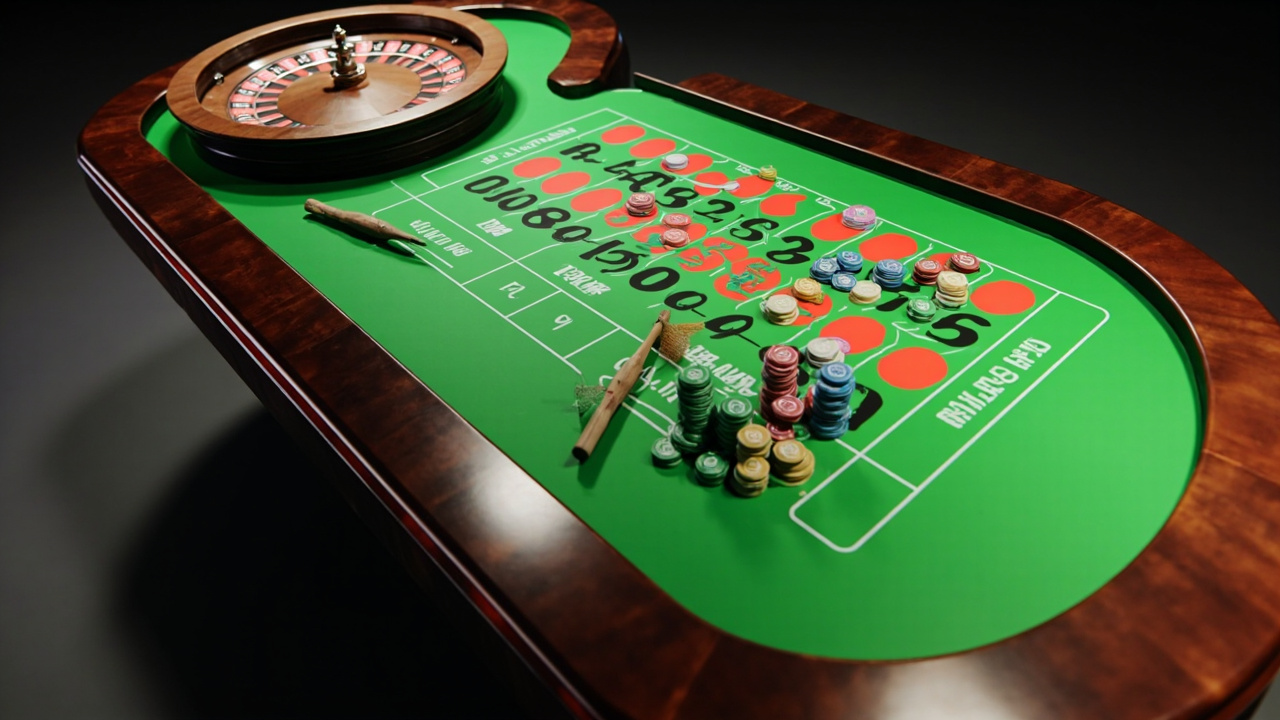


Craps Online Simulator Real Money Free: Testing the Tables Before You Stack
Walking into a casino floor in Sydney on a busy Friday arvo, the noise hits you before the tables do. Online, that same energy needs to translate with out the clatter of dice under your hand. We looked at how a craps online simulator real money free setup fits into a modern Australian player journey, treating it less like a gimmick and more like a deliberate channel decision. The goal was simple: see whether a free simulator actually helps adults 18+ understand the pace, the layout, and the risk before they commit any cash. If the experience feels disjointed, it usually signals a brand that hasn’t connected strategy to execution properly.
Brand Identity and Everyday Usability
The platform positions itself as a low-friction training ground that doubles as a soft entry into real money play, rather than a full-blown casino replacement. Its core offer sits around a clean craps table simulator with optional real money modes once registration and verification are complete, while the free side stays entirely separate so you can test the flow without touching a deposit. Two traits stand out during a normal session: the table speeds feel calibrated for adults who want to read the layout instead of chasing a fast countdown, and the navigation keeps the dice, bets, and payoffs visible without crowding the screen. Usability holds up on mobile because the touch targets stay consistent across the pass line, don’t pass, and proposition bets, which matters when you’re checking in during a lunch break. The overall fit works for someone who wants to learn the rhythm first and decide later, though the free mode is clearly a learning layer rather than a standalone product.
Strengths Alongside Real Conditions and Trade-offs
The strongest point is how the simulator lets you practise bet placement and payout maths without pressure, which is handy when you’re still working out whether you prefer a slow pass line approach or a heavier proposition style. Real conditions do cut in fairly quickly, though. The free tables run on a fixed pace that doesn’t fully mirror the speed or variance you’ll see when real money is on the line, so a smooth session here doesn’t automatically translate to confidence at a paid table. There’s also a trade-off in bonus mechanics: any welcome offer or reload usually applies only after verified registration, which means the free simulator stays outside the bonus ecosystem rather than feeding into it. That’s a fair boundary, but it does mean the free experience is about familiarity, not value stacking. Payments, when you move into real money, are presented in AUD with standard deposit and withdrawal windows, and the registration flow asks for the usual identity checks rather than letting you skip them. None of this is hidden, but it does mean the simulator is a starting point, not a promise of easy transitions.
Comparing the Australian Setup With International Practice
Seen against international practice, the Australian approach is more guarded than what you’ll find in the United States, where state-by-state frameworks can make real money craps more openly available in certain markets. In the UK and parts of Europe, free simulators often sit closer to promotional tools that feed directly into bonus offers, whereas here the safer pattern is to keep the free and paid experiences clearly separated so players aren’t nudged into misunderstanding the risk. New Zealand sits in a similar cautious space, and the local expectation reflects that: adults 18+ generally want a clear line between practice and real money, not a blur. That’s why a setup that treats the simulator as a learning layer, with real money as a separate decision, tends to fit the Australian market better than a model built around aggressive cross-promotion. It’s a more disciplined way to handle channel design, and it usually reads as more honest to players who’ve already seen enough hype elsewhere.
Expert View on Compliance and Player Clarity
Andrew Hall, Head of Product, Ironbark Compliance Advisory, sees the free-to-real boundary as a design problem as much as a legal one.”A simulator only earns its place if it doesn’t blur the line between practice and real money play, because confused expectations create the kind of friction compliance teams end up cleaning up later,” he says. That caveat lines up with what we saw: the platform works best when the free tables are presented as a learning space, with registration, verification, and real money modes kept in their own lane. When that separation is clear, the experience feels more deliberate and less like a soft sell.
If you want to sanity-check the wider market before settling on one platform, it helps to compare a few options side by side rather than assuming the first decent-looking table is the right fit. A useful read for that is this spinsamurai review, which breaks down how one operator handles its overall offer and usability. For a broader angle on free play as a comparison tool, this piece on free baccarat for Aussies explains why a safer practice-first approach can help you weigh casinos without rushing into a deposit. Neither replaces your own judgment, but both fit the same habit: test the experience first, then decide whether the real money side actually suits your pace.
Craps Online Simulator Real Money Free: Testing the Tables Before You Stack
Walking into a casino floor in Sydney on a busy Friday arvo, the noise hits you before the tables do. Online, that same energy needs to translate without the clatter of dice under your hand. We looked at how a craps online simulator real money free setup fits into a modern Australian player journey, treating it less like a gimmick and more like a deliberate channel decision. The goal was simple: see whether a free simulator actually helps adults 18+ understand the pace, the layout, and the risk before they commit any cash. If the experience feels disjointed, it usually signals a brand that hasn’t connected strategy to execution properly.
Brand Identity and Everyday Usability
The platform positions itself as a low-friction training ground that doubles as a soft entry into real money play, rather than a full-blown casino replacement. Its core offer sits around a clean craps table simulator with optional real money modes once registration and verification are complete, while the free side stays entirely separate so you can test the flow without touching a deposit. Two traits stand out during a normal session: the table speeds feel calibrated for adults who want to read the layout instead of chasing a fast countdown, and the navigation keeps the dice, bets, and payoffs visible without crowding the screen. Usability holds up on mobile because the touch targets stay consistent across the pass line, don’t pass, and proposition bets, which matters when you’re checking in during a lunch break. The overall fit works for someone who wants to learn the rhythm first and decide later, though the free mode is clearly a learning layer rather than a standalone product.
Strengths Alongside Real Conditions and Trade-offs
The strongest point is how the simulator lets you practise bet placement and payout maths without the original pressure, which is handy when you’re still working out whether you prefer a slow pass line approach or a heavier proposition style. Real conditions do cut in fairly quickly, though. The free tables run on a fixed pace that doesn’t fully mirror the speed or variance you’ll see when real money is on the line, so a smooth session here doesn’t automatically translate to confidence at a paid table. There’s also a trade-off in bonus mechanics: any welcome offer or reload usually applies only after verified registration, which means the free simulator stays outside the bonus ecosystem rather than feeding into it. That’s a fair boundary, but it does mean the free experience is about familiarity, not value stacking. Payments, when you move into real money, are presented in AUD with standard deposit and withdrawal windows, and the registration flow asks for the usual identity checks rather than letting you skip them. None of this is hidden, but it does mean the simulator is a starting point, not a promise of easy transitions.

Comparing the Australian Setup With International Practice
Seen against international practice, the Australian approach is more guarded than what you’ll find in the United States, where state-by-state frameworks can make real money craps more openly available in certain markets. In the UK and parts of Europe, free simulators often sit closer to promotional tools that feed directly into bonus offers, whereas here the safer pattern is to keep the free and paid experiences clearly separated so players aren’t nudged into misunderstanding the risk. New Zealand sits in a similar cautious space, and the local expectation reflects that: adults 18+ generally want a clear line between practice and real money, not a blur. That’s why a setup that treats the simulator as a learning layer, with real money as a separate decision, tends to fit the Australian market better than a model built around aggressive cross-promotion. It’s a more disciplined way to handle channel design, and it usually reads as more honest to players who’ve already seen enough hype elsewhere.
Expert View on Compliance and Player Clarity
Andrew Hall, Head of Product, Ironbark Compliance Advisory, sees the free-to-real boundary as a design problem as much as a legal one.”A simulator only earns its place if it doesn’t blur the line between practice and real money play, because confused expectations create the kind of friction compliance teams end up cleaning up later,” he says. That caveat lines up with what we saw: the platform works best when the free tables are presented as a learning space, with registration, verification, and real money modes kept in their own lane. When that separation is clear, the experience feels more deliberate and less like a soft sell.
If you want to sanity-check the wider market before settling on one platform, it helps to compare a few options side by side rather than assuming the first decent-looking table is the right fit. A useful read for that is this spinsamurai review, which breaks down how one operator handles its overall offer and usability. For a broader angle on free play as a comparison tool, this piece on free baccarat for Aussies explains why a safer practice-first approach can help you weigh casinos without rushing into a deposit. Neither replaces your own judgment, but both fit the same habit: test the experience first, then decide whether the real money side actually suits your pace.